Chris Chambers
Chris Chambers is the toughest, smartest, and most morally complex member of the four-boy gang at the heart of Stephen King's novella "The Body." As the de facto leader of the group, he drives the quest to find the body of a missing boy, Ray Brower, and his fierce loyalty, hidden intelligence, and painful awareness of the town's low expectations for him define both the adventure and its aftermath. Chris's arc—from a boy burdened by his family's reputation and his own past theft, through a moment of armed brinkmanship against older bullies, to his eventual escape to college and tragic death—makes him the story's emotional and ethical center.
Identity and Background
Chris Chambers comes from a family that the town of Castle Rock has already judged and condemned. His older brother Frank is serving a long prison term in Portsmouth for rape and criminal assault; another brother, Richard—known as Eyeball—dropped out of high school in the tenth grade and runs with the local juvenile delinquents. Chris's father is a drunk who spends most of his time in Sukey's Tavern and beats Chris regularly, leaving him marked up with bruises on his cheeks and neck, a swelled eye, and once a clumsy bandage on the back of his head. On other occasions Chris is simply too lamed up to attend school. The town truant officer, Bertie Halliburton, hauls Chris back to school if he is playing hooky but goes away without a word when he finds Chris is home because his father has beaten him. The year before the story begins, Chris was suspended for three days after milk-money disappeared while he was room-monitor; because he is a Chambers, he was assumed guilty and punished even though he always swore he did not take it. That suspension led his father to put him in the hospital overnight, breaking his nose and his right wrist. Chris is acutely aware that everyone in town expects him to turn out bad, and that expectation has begun to shape his own self-image.
Life and Plot Trajectory
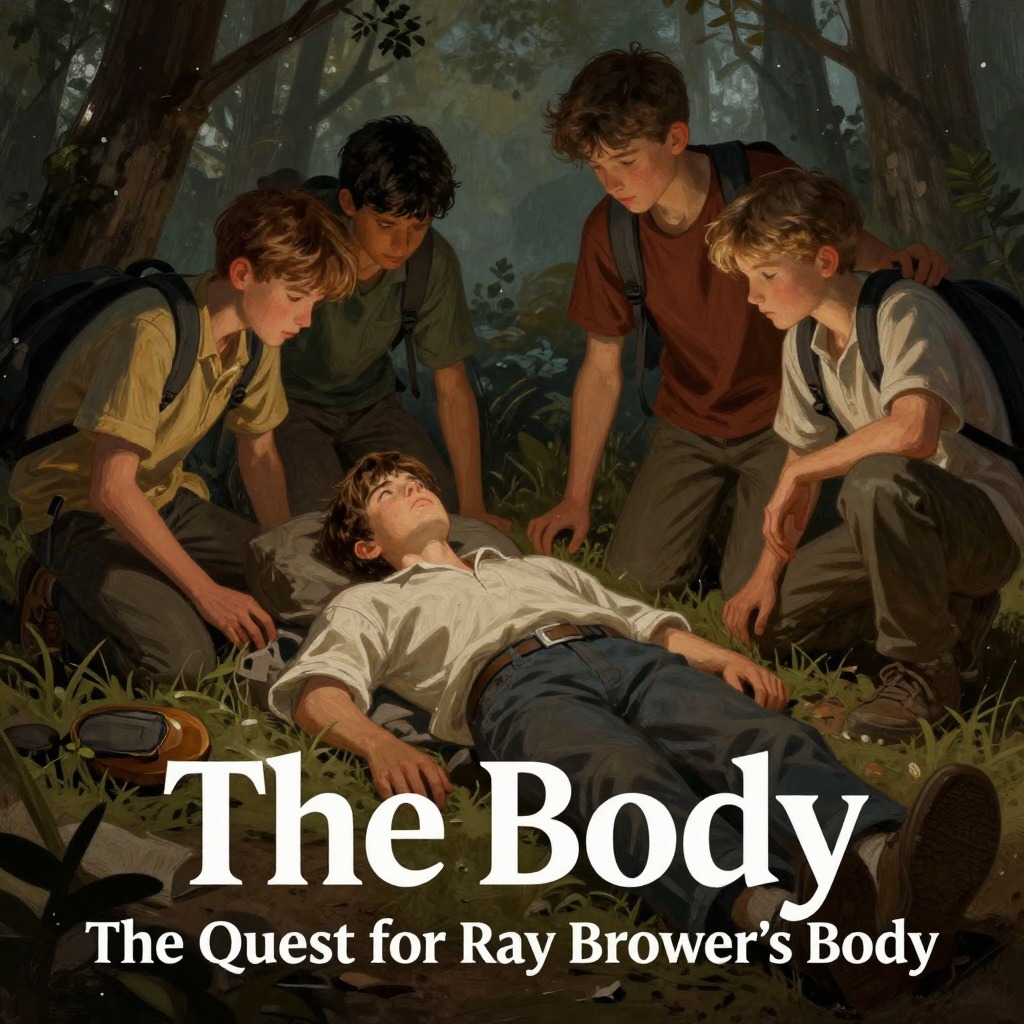
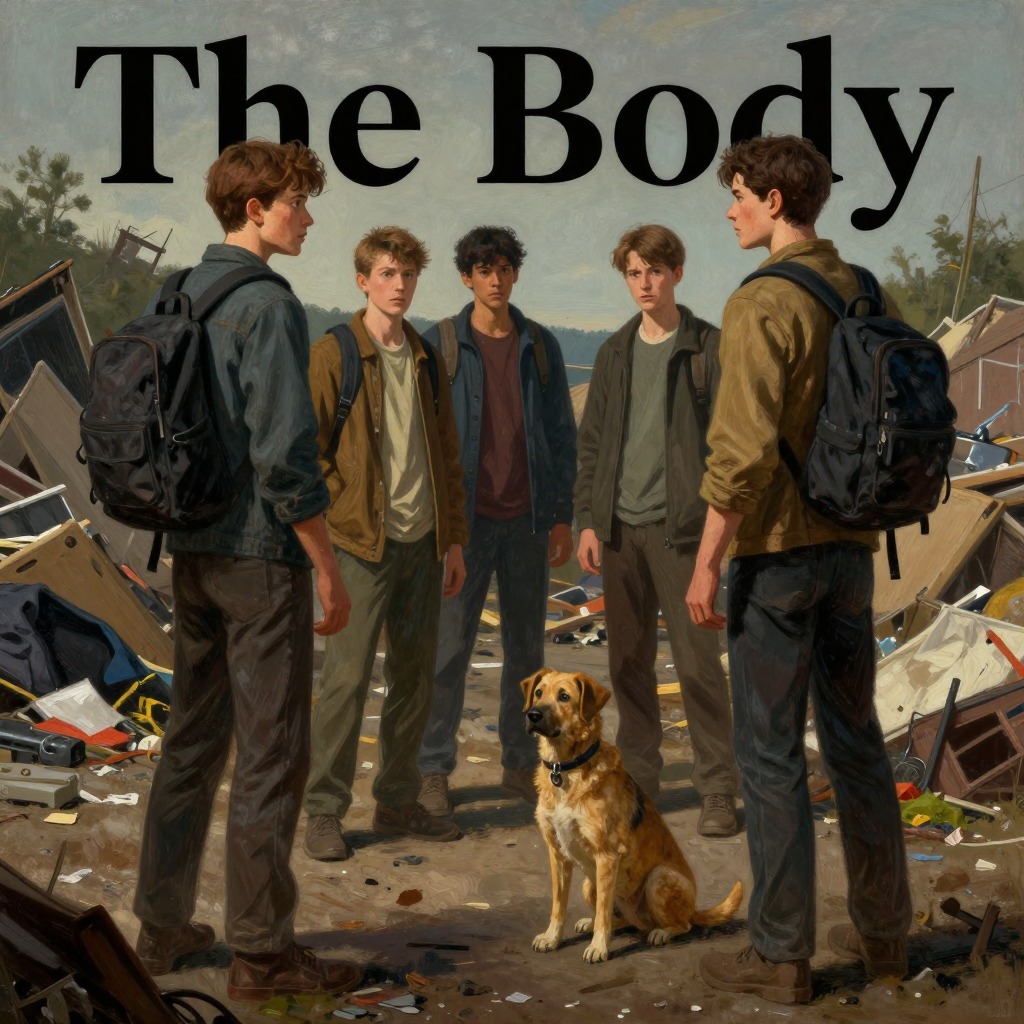
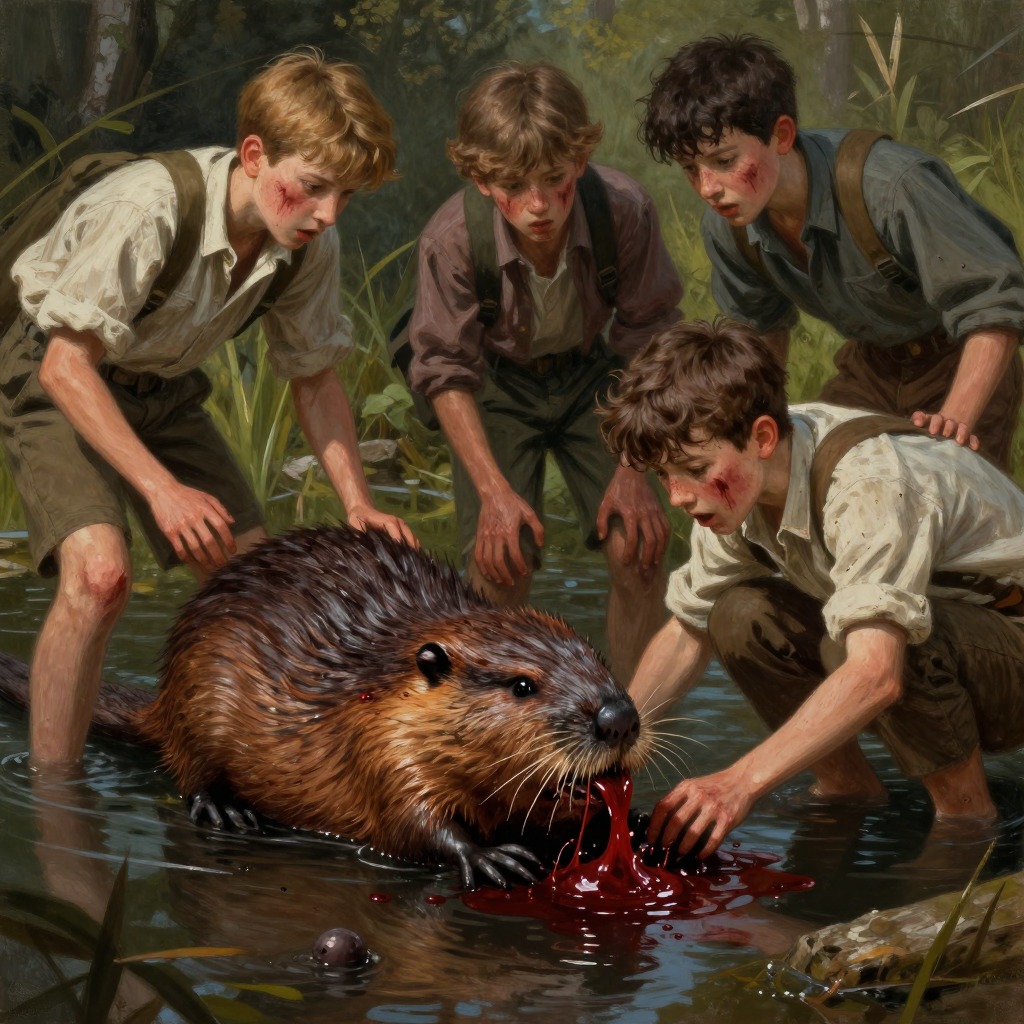
On the Friday before Labor Day weekend, Chris is in the treehouse with Gordon Lachance and Teddy Duchamp, playing three-penny-scat in the record heat, when Vern Tessio bursts in with the news that he has overheard his brother Billy and Charlie Hogan talking about a dead boy—Ray Brower, the missing child from Chamberlain—hit by a train near the Back Harlow Road. Chris immediately grasps the significance: they can find the body and report it, getting their pictures in the paper. He becomes the expedition's planner and leader, calculating distances, setting the pace, and making the key decisions. Along the way, he reveals a .45 pistol he has stolen from his father's bureau, claiming he brought it in case they see a bear. When the group faces the terrifying crossing of the GS&WM railroad trestle over the Castle River, Chris goes first, and when a train comes, he is the first to reach safety. After the leech attack in the beaver pond, it is Chris who vomits in the juniper bushes and then apologizes to Gordon with mute, apologetic eyes. When they finally find Ray Brower's body, Chris is the one who turns him over and later, when Ace Merrill's gang arrives to claim the body, Chris fires the pistol into the water to stop them, then faces down Ace in a raw piece of brinkmanship, forcing the older boys to retreat. Afterward, he breaks down completely, crying and screaming in the mud, lying in the same posture as the dead boy. He then leads the group back to Castle Rock, walking all night, and at dawn he and Gordon part on the corner of Gordon's street.
Key Actions and Objectives
Chris's central objective is to find Ray Brower's body and claim the discovery for his group, but this goal is intertwined with a deeper, unspoken need: to prove that he and his friends matter, that they can accomplish something significant despite the town's low opinion of them. He is the one who insists they walk the railroad tracks rather than hitchhike, treating the journey as a rite of passage. When Ace Merrill's gang—including Chris's own brother Eyeball—arrives to steal the body, Chris does not back down. He levels the .45 and says, with genuine regret in his voice, "Where do you want it, Ace? Arm or leg? I can't pick. You pick for me." Ace stops. Chris then insults Ace's mother repeatedly, pushing the confrontation to its limit until Ace retreats. Afterward, Chris collects the two shell casings from the mud and stuffs them into his pocket, ensuring no evidence remains. He then persuades the others to abandon the body rather than carry it back, arguing that Ace's gang could lie and get them all sent to the reformatory.
Relationships and Conflict
Chris's most important relationship is with Gordon Lachance. He is the only one who understands Gordon's ambition to become a writer, and he tells Gordon that the stories "come outta you just like bubbles out of soda-pop." In a long, painful conversation on the tracks, Chris warns Gordon that their friends will drag him down: "Your friends do. They're like drowning guys that are holding onto your legs. You can't save them. You can only drown with them." He urges Gordon to take the college courses and not let the gang's expectations limit him. Chris also reveals to Gordon that he did steal the milk-money, but that he tried to give it back to Miss Simons, who kept it and bought herself a new skirt. He knows no one would have believed his story because of his family name. With Teddy and Vern, Chris is the peacemaker—he comforts Teddy after Milo Pressman calls Teddy's father a loony, and he is the one who calms Teddy down after the train-dodge fight. His conflict with his own brother Eyeball is bitter; Eyeball later breaks Chris's arm in two places and leaves his face looking "like a Canadian sunrise." Chris's relationship with his father is one of pure hatred: his father beats him regularly, and Chris is marked up every two weeks or so.
Change and Ending
Chris's trajectory after the Labor Day weekend is one of determined escape. He enrolls in the college courses in his second year of junior high, despite everyone—his parents, his friends, the guidance counselor, and most of the teachers—telling him he cannot do the work. He studies with Gordon almost every night, sometimes for six hours at a stretch, re-learning fractions and grammar from scratch. He wears out his copy of Warriner's English grammar and buys another. By their junior year, he stands nineteenth in the class. He is accepted at the University of Maine's Portland campus, where he studies pre-law. Near the end of 1971, Chris goes into a Chicken Delight in Portland to get a three-piece Snack Bucket. Two men start arguing about who was first in line; one pulls a knife. Chris, who had always been the best at making peace, steps between them and is stabbed in the throat. He dies almost instantly. The man with the knife had been released from Shawshank State Prison only the week before. Gordon reads about it in the paper, drives out of town, and cries for half an hour.
Narrative Role and Evaluation
Chris Chambers functions as the moral and emotional anchor of "The Body." He is the character who most clearly sees the trap that Castle Rock represents and who makes the conscious, painful choice to try to escape it. His intelligence is hidden beneath a leather jacket and engineer boots, and his capacity for peacemaking is born from his own experience of violence. The story's central irony is that Chris, who survives the train trestle, the leech pond, the confrontation with Ace Merrill, and the beatings from his father and brother, is killed years later by a stranger's random violence while trying to make peace. Gordon, reflecting on the story years later, notes that of the four boys who flipped coins to see who would go for supplies, only the one who actually went—Gordon himself—is still alive. Chris's death, like Vern's in a housefire and Teddy's in a car crash, underscores the novella's meditation on how small decisions echo forward through time, and how the friends of childhood can drown while one survives.